


Products
Support
Contact Us
No. 509-510, Bldg B, Idea Industry Park, Fengxiang Road, Shunde District, Foshan, Guangdong, China
 +86 186 8025 3077
Mon - Fri (6:00 AM – 10:00 PM)
Sat - Sun (6:00 AM – 10:00 PM)
 darren@fsmanybest.com
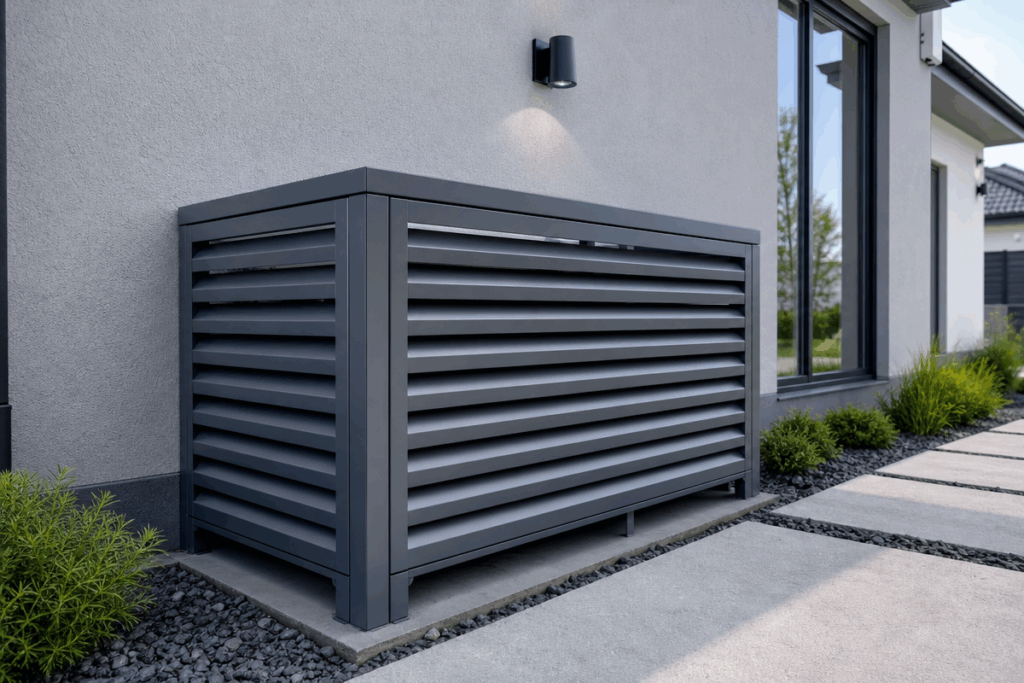
An outdoor air conditioning unit is exposed to everything: UV, rain, dust, salt, and debris.
Without protection, the condenser coils clog. The compressor overheats. The housing corrodes. A unit that should last 15 years fails in 5.
An aluminum air conditioning cover is not a cosmetic accessory. It is a protective enclosure that extends equipment life, reduces maintenance, and integrates the unit into the building's design.
Here is what aluminum AC covers do, how they are engineered, and what to specify for your project.
| Challenge | How Aluminum Solves It |
|---|---|
| UV degradation | PVDF or powder coating resists UV without chalking or fading |
| Corrosion | Aluminum naturally forms a protective oxide layer; coastal-grade finishes resist salt air |
| Heat buildup | Perforated or louvered design allows airflow; prevents compressor overheating |
| Impact damage | 1.5–3.0mm aluminum withstands impact from debris and weather |
| Weight | Lightweight for easy installation; no structural reinforcement needed |
| Aesthetics | Custom colors, finishes, and patterns match building design |
Other materials fail:
Aluminum is the only material that combines durability, ventilation, and design flexibility.
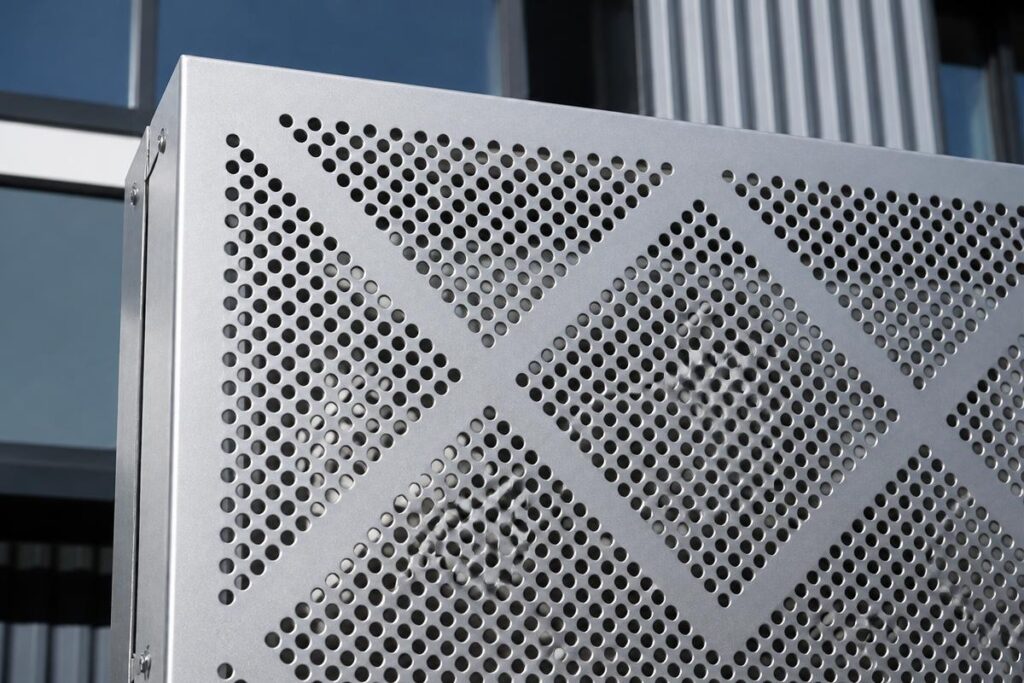
| Parameter | Specification |
|---|---|
| Material | Aluminum alloy 3003 or 5005 |
| Panel thickness | 1.5mm – 3.0mm |
| Frame | Extruded aluminum, 6063-T5 |
| Finish | PVDF (coastal/high-UV) or powder coat (inland) |
| Ventilation | Louvered, perforated, or mesh — minimum 70% free area |
| Coating warranty | 10–20 years color retention |
| Fire rating | Non-combustible (aluminum, Class A) |
| Customization | Any RAL color, wood grain, anodize, custom perforation |
The cover must not restrict airflow. A rule of thumb: minimum 70% free area on all sides, or the unit overheats and efficiency drops.
Covers must allow maintenance access without removal:
Condensate and rainwater must drain freely:
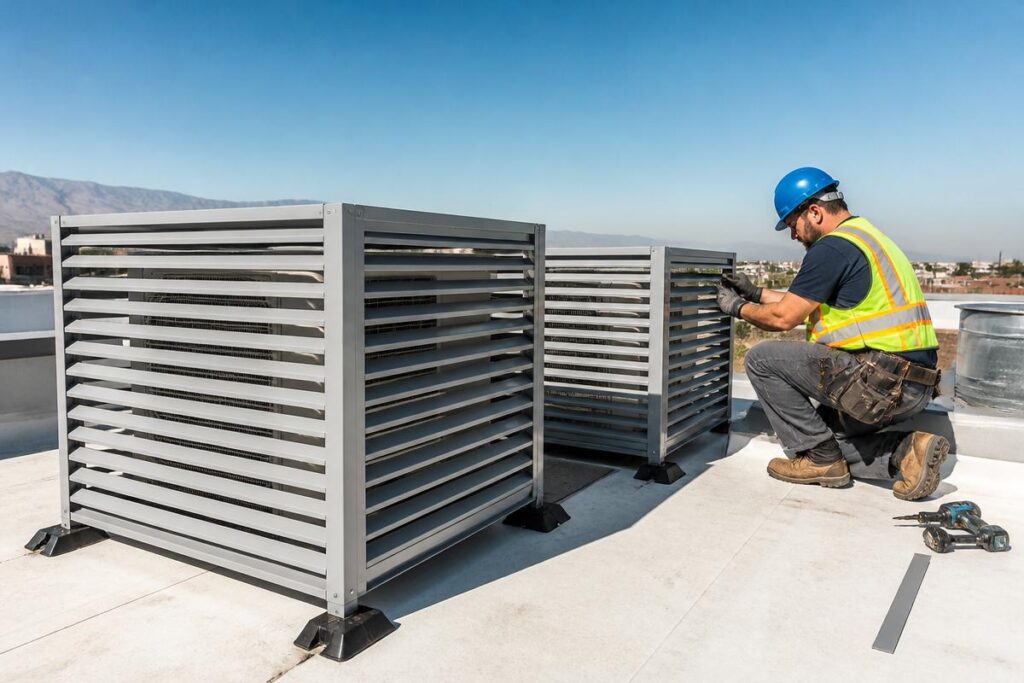
Custom engineering — Dimensions, ventilation pattern, and finish engineered for your specific AC unit and climate.
Coastal-grade standard — PVDF coating for any project within 5km of the ocean. Not an upgrade — a requirement.
Quick turnaround — Standard designs in 2–3 weeks, custom in 4–6 weeks.
Fire-safe — Aluminum is non-combustible. No fire-rated core needed.
Full-service — Design, fabrication, and installation guidance.
An air conditioning unit is a significant capital investment. Protecting it with a 200–200–500 aluminum cover extends its life by 10+ years and prevents 3,000–3,000–8,000 in premature replacement costs.
The cover also transforms an industrial eyesore into an intentional design element.
[Request AC Cover Samples] | [Download Specification Guide] | [Get a Quote]
Manybest — Protecting Equipment, Enhancing Design.
Customized aluminum panels are very durable and will last a long time even with regular use. They can be used outdoors or indoors and will not rust or fade over time. This means that they will not need to be replaced as often as other materials like wood or plastic would need to be replaced.
Their appeal stems from the numerous advantages they offer over other materials. Some of these advantages include being lightweight, long-lasting, and low maintenance.
Aluminum Veneer System is a collection of internal and external cladding developed to fulfill the specific needs of each project. Special dimensions and designs can be requested by designers, architects, and consultants. These decorative panels are commonly employed in both commercial and residential buildings. It is used in industrial applications such as cladding, facades,and building products like windows, doors ,screen and ceiling.
Aluminum Panels is one of the most popular materials used in home construction and renovation. This element is lightweight and also has a high strength-to-density ratio, which makes it ideal for building homes and other structures.
If you are looking for an alternative to wood or vinyl siding, aluminum panels can be a great choice. Aluminum is easily customizeble, so you can find just about any color that you want. There are some things that you should know about this type of panel before you begin your project.
1)Special dimension and designs can be customized according to project requirements.
2)Could be customized for indoor/outdoor ceiling and wall decoration.
3)Relatively low maintenance solution for any wall application.
4)Windproof and waterproof, fireproof. Would not fade or rust or corrode, durable enough
for long term use.
5)You can enjoy one strop service from design to installation guide for your project from our team.
We have rigorous quality test system, from raw materials to finished products, the materials must be checked and signed by QC people.
And The finished product must go through three rounds of spot inspection.We must provide the best products to our customers.
For those regular customers, we offer incredible discount, sample free shipping, 3D Graph Draw, custom packaging and QC as per custom requirements.
From 2009 to 2025Manybest is with 16 years experience in this industry, we have served clients from more than 100 countries/areas, Manybest is well-known for its quality and Manybest team win clients’ trust by honesty and down to earth business style.